*** Free consultation ***
The Foundation of Recovery: Why Trust in Your Physiotherapist Matters
In the world of injury and rehabilitation, it’s easy to focus purely on exercises, treatment plans, and timelines. But as this blog from Doug Jones: Altius Healthcare Owner/Director in collaboration with James Oswald explores, one of the most powerful and often overlooked drivers of recovery... trust. Drawing on decades of experience in elite sport and personal insight from both sides of the treatment table, Doug shares why the relationship between athlete and physiotherapist's and the wider team at Altius Healthcare can make or break the journey back to full performance. This piece goes beyond the mechanics of physiotherapy rehab to highlight the human side of recovery where communication, confidence, and collaboration become the true foundation for longterm success. James was first introduced to Doug as a physiotherapist over 12 years ago whilst suffering from plantar fasciitis, since then Doug and Altius Healthcare has become an indispensable part of James' support network for t heir expertise and experience.
HEALTH THROUGH SPORTRECOVERYTRAININGSTRENGTH & CONDITIONINGPHYSIOTHERAPYMARATHONTRIATHLONGYM WORK
Doug Jones: Owner/Director Altius Healthcare, James Oswald: Coach
5/1/20265 min read
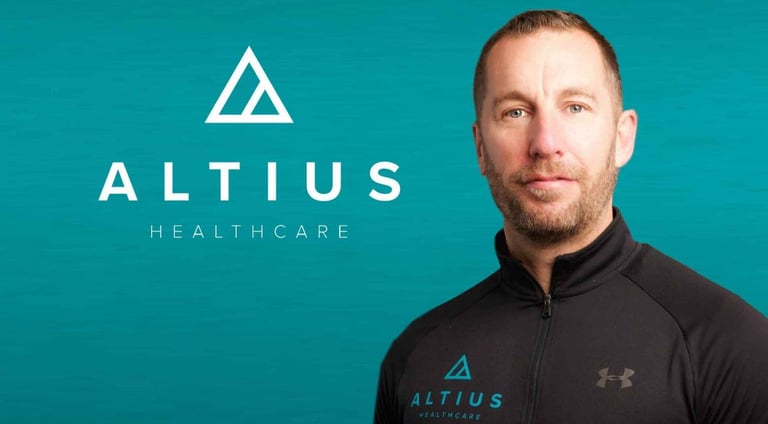

By Doug Jones; Owner/Director Altius Healthcare
Altius Healthcare Background
Altius Healthcare began in 2016, but the journey that led to it started much earlier in my career as a physiotherapist.
For more than 17 years I had the privilege of working in elite sport, including roles with the Sale Sharks, London Wasps, and with England national rugby union team, alongside my work in private practice. During that time, I saw first-hand the level of care, expertise, and attention that professional athletes receive to keep them performing at their best.
But the true inspiration for Altius came from a much more personal experience.
When I was diagnosed with a brain tumour, I suddenly found myself on the other side of healthcare. Going through surgery and the recovery process gave me a completely different perspective, not just as a clinician, but as a patient. The care, support, and expertise I received during that time played a huge role in my recovery and left a lasting impression on me.
That experience shaped the vision behind Altius.
From day one, our aim has been simple: to provide every person we treat with the same level of care that elite athletes receive. Whether someone is dealing with an injury, managing chronic pain, or simply wanting to move and live better, our goal is to help them achieve more in their work, their sport, and their everyday lives.
Over the years, another belief has become central to everything we do: physical and mental health are closely connected. When one improves, the other often follows. That’s why we don’t just focus on injury treatment, we focus on overall wellbeing.
Our fantastic team supports patients not only through physiotherapy and rehabilitation, but also through a range of services including podiatry, chiropody and injection clinics, nutritional advice, massage, biometric gate analysis, acupuncture and shockwave therapy, Yoga, Pilates, and guided exercise programmes that help people stay well both now and in the future.
Today, Altius Healthcare continues to grow, with clinics located in Hale, Greater Manchester, Knutsford, Bury, and Manchester City Centre.
Wherever someone walks through our doors, the philosophy remains the same: to provide expert care, genuine support, and the tools people need to live healthier, stronger lives.
But that’s enough about us, now on with the blog.
The Foundation of Recovery: Why Trust in Your Physiotherapist Matters
At Altius Healthcare, we work with athletes at every stage of their journey, from people struggling to perform daily tasks, 'weekend warriors' to elite competitors. One thing remains consistent across all levels: recovery works best when trust exists between athlete and physiotherapist.
Coaches focus on performance. Nutritionists focus on fuel. But the physiotherapist sits at the intersection of performance, injury prevention, and recovery. Our job is to protect the structural integrity of the athlete while helping them return to doing what they love.
Technical skill is essential, of course. But in my experience, the quality of the relationship between athlete and physio often determines how successful and sustainable long-term recovery will be.
Beyond the Treatment Table
Physiotherapy is about far more than massage, taping, or a quick adjustment.
At Altius Healthcare, our role is to identify mechanical dysfunction, manage acute injuries, and build rehabilitation strategies that bridge the gap between injury and peak performance.
Rehabilitation involves physical treatment, progressive loading, honest conversations about pain, and sometimes difficult decisions about timelines. Because of that, mutual respect and trust between clinician and patient are essential.
Without it, recovery becomes guesswork.
The Psychology of Injury Recovery
Injury places athletes in a vulnerable positions, and outside of their usual comfort space.
Pain is only one part of the challenge. Athletes also face uncertainty, frustration, fear of losing fitness, and pressure to return to competition as quickly as possible.
Trust once again plays a critical role in managing these pressures.
Honesty in Reporting
For a physiotherapist to diagnose accurately, athletes must feel comfortable being completely honest about pain levels and rehabilitation adherence.
When trust is missing, athletes often minimise symptoms in an attempt to speed up their return. Unfortunately, this often leads to setbacks or re-injury.
Breaking the Fear-Avoidance Cycle
After major injuries, such as an ACL rupture, many athletes develop hesitation around explosive movements or high impact loading.
A trusted physiotherapist becomes a steady guide during these final stages of rehabilitation, helping rebuild confidence as well as strength.
When Subjective Feel Meets Objective Science
Every athlete experiences pain differently.
Part of our role as physiotherapists is learning the subtle language of each individual body.
Over time, a trusted practitioner learns the difference between:
· productive soreness from training
· warning signs of overload
· pain that signals a potential injury
This longitudinal understanding allows us to suggest an adjustment to training loads early and prevent minor issues from becoming major problems.
Navigating the Return-to-Play Timeline
One of the most difficult conversations in sports medicine is deciding when an athlete should return to competition.
Athletes understandably want to return as soon as possible. Biology, however, has its own timeline.
A trusted physiotherapist serves as the voice of reason.
When athletes trust their clinician, a “not yet” recommendation is seen as protection rather than restriction.
At Altius Healthcare, we also avoid one size fits all protocols. Rehabilitation should reflect the specific demands of the athlete’s history, sport and position.
A marathon runner, a triathlete, and a rugby prop all stress their bodies in very different ways. Their rehabilitation must reflect that reality.
Empowerment Through Education
One of my core beliefs is that great physiotherapy should make patients more independent, not more reliant.
Our goal is not simply to treat injuries but to teach athletes how their bodies work and how to maintain them.
When athletes understand the ‘why’ behind a mobility drill or strength progression, they become active participants in their recovery rather than passive recipients of treatment. They are also less likely to skip important sessions to be completed at home.
That knowledge ultimately leads to longer careers, fewer injuries, and better performance.
The Performance Team
But we can’t do it all. Modern athletic performance is rarely managed by one professional alone.
Physiotherapists often work alongside coaches, strength and conditioning specialists, and medical staff. Effective communication between these roles is essential to managing training load and recovery.
That collaboration only works when the athlete trusts that their physiotherapist is sharing and receiving information with their permission to support their performance and longevity, not to delay their return.
Conclusion
Injury doesn’t just test the body. It tests patience, confidence, and decision making.
Finding a physiotherapist is easy. Finding one you trust and building the relationship is far more valuable.
That relationship is built through:
· honest communication
· shared performance goals
· and a genuine understanding of the athlete’s physical and psychological landscape.
At its best, a physiotherapist becomes more than a clinician. They work with coaches, become an educator, and steady voice during the moments when athletes are most tempted to rush the process.
True recovery is not just about healing tissue. It’s about restoring confidence in your body and clarity in your decisions.
When athletes find a practitioner who understands their sport, respects their ambitions, and communicates openly, recovery becomes more than rehabilitation.
It becomes the foundation for long-term performance and resilience.
Please feel free to get in contact via our webpage link below to see how Altius Healthcare can support you, as we do with many athletes, including those through our partnership with James Oswald Coaching.