*** Free consultation ***
Endurance Fuelling: What Works, What Doesn’t, and Why It Matters
You can have the perfect training plan, the best bike, the lightest shoes, and months of disciplined preparation behind you, but if your fuelling strategy falls apart, so can your race. In endurance sport, fitness determines your potential, but nutrition determines whether you can actually deliver it. From the marathon runner trying to avoid “the wall,” to the Ironman athlete managing energy over 8–17 hours, to the sportive rider pacing long climbs, fuelling is often the deciding factor between a strong finish and a survival shuffle. Yet fuelling remains one of the most misunderstood aspects of performance. How much carbohydrate do you really need? Should you rely on gels, drinks, chews, or real food? Why do some athletes seem able to tolerate anything, while others struggle with GI issues halfway through an event? This guide breaks down the science and the practicalities of endurance fuelling, explaining how your body uses fat and carbohydrates, comparing the most popular fuelling formats, and outlining strategies for both training and race day. Because when you understand not just what to take, but why and when, you turn nutrition from a risk into a performance advantage.
MARATHONPERSONALISED COACHINGTRAININGRACE DAYFUELLINGHYDRATION
James Oswald, Coach
2/27/20265 min read
Endurance Fuelling: What Works, What Doesn’t, and Why It Matters
Every endurance athlete, from novice marathoners to seasoned Ironman finishers know that training builds fitness, but nutrition fuels performance. Whether you’re targeting a PB or just aiming to finish strong, fuelling strategy plays a massive role in energy availability, pacing, and how you feel on race day.
Let’s unpack your fuelling options, the pros and cons of different formats, and how to make choices that fit your training and racing goals
Why Fuelling Matters in Endurance Sports
Fuel Utilisation: Fat Stores vs Carbohydrates
Your body uses two primary fuel sources for endurance exercise: fat stores and carbohydrates (stored as glycogen in muscles and liver). How it prioritises these depends on intensity:
Fat as a Fuel Source
- At low intensities (below 65% max heart rate), fat provides 60 to 80% of your energy. Your body has a nearly unlimited supply of stored fat, even lean cyclists carry enough to fuel 100+ miles of riding.
- Aerobic training improves your body’s ability to burn fat efficiently. Over time, this "fat adaptation" reduces your reliance on glycogen, preserving these limited stores for higher-intensity sections like hills or sprints.
Carbohydrates as a Fuel Source
- At higher intensities (above 70% max heart rate), your body shifts to using more glycogen, it’s a faster-acting fuel source, essential for maintaining power.
- Glycogen stores are limited (typically enough for 90 to 120 minutes of hard exercise), so depleting them leads to "hitting the wall" or '"bonking", both a sudden fatigue, drop in performance, and loss of power.
Effective fuelling:
preserves glycogen
stabilises blood sugar
reduces perceived effort
supports cognitive focus
But fuelling isn’t only about what you take, it’s also about when and in what form you take it.
Forms of Endurance Fuel: Pros & Cons
1. Energy Gels — Concentrated Carbs on the Go
What they are: Squeezable packets of highly digestible sugars.
Typical carb range: 20–30 g per gel.
Benefits
✔ Quick energy — rapid absorption
✔ Easy to carry and use while moving
✔ Some include caffeine for extra performance
Challenges
⚠ Sticky texture may be off-putting
⚠ Can cause GI distress if taken without fluid
⚠ Too many consecutively can overwhelm sensitive stomachs
Popular brands
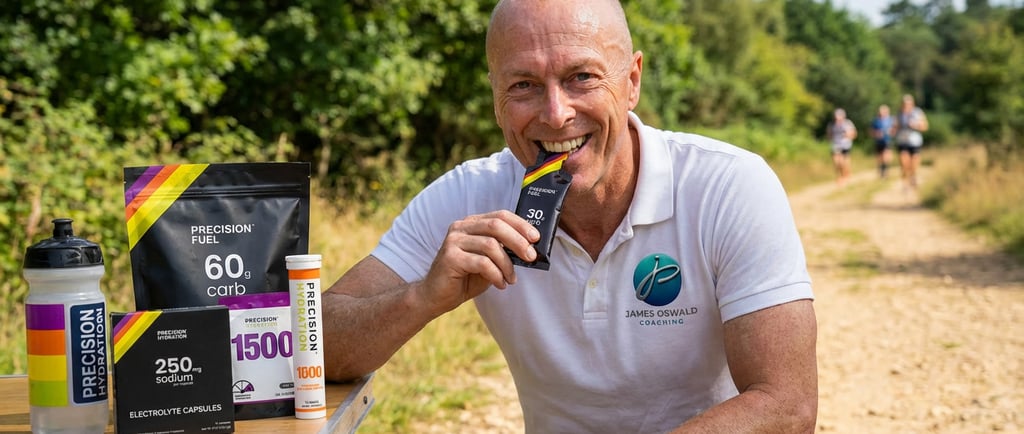
Precision Fuel & Hydration – less sticky, 30g carbs, or innovative Flow Gel format for convenience
SIS (Science in Sport) GO Isotonic Gel – no water needed, smoother on the gut
GU Energy Gel – classic choice, variety of flavours, some with caffeine
Maurten Gels – more solid jelly texture, hydrogel tech for smoother digestion
High5 EnergyGel – less sweet, easy to stomach
Best for: Runners and cyclists who need concentrated carbs at key points (e.g., every 20–45 minutes).
2. Sports Drinks — Hydration + Carbohydrate Mix
What they are: Flavoured liquids containing sugars, electrolytes, and sometimes amino acids.
Benefits
✔ Hydration and energy in one
✔ Electrolytes help maintain fluid balance
✔ Gentler on many athletes’ GI systems than solid carbs
Challenges
⚠ Can be too sweet for some
⚠ Needs to be consumed regularly to be effective
⚠ Risk of hyponatraemia if over-hydrating without electrolytes
Popular brands
Precision Fuel & Hydration – Carb & Electrolyte delivers 60g carbs and 1000mg sodium. Also, great pre-race for nervous stomachs
Science in Sport GO Electrolyte – balanced carbs and salts
Tailwind Endurance Fuel – combines fuel and hydration without flavour fatigue
Maurten Drink Mix – hydrogel tech for smoother digestion
Best for: Long training rides, sportives, and races where hydration is as crucial as carbs.
3. Chews & Gummies — Solid Carb Alternative
What they are: Bite-sized chewable carbs (often identical ingredients to gels).
Benefits
✔ Familiar texture, easier to time intake
✔ Gentler for some runners who dislike gels
✔ Good variety of flavours
Challenges
⚠ Need to be chewed — harder while moving
⚠ Higher risk of choking if not taken with fluid
⚠ Can stick to teeth
Popular brands
Precision Fuel & Hydration – high carb to weight ratio, 3 flavours, 2 chews per pack, high convenience
Clif Shot Bloks – available in different flavour formulations
Honey Stinger Organic Energy Chews – organic ingredients, good flavour
Science in Sport Rego Rapid Fuel Gummies – fast-absorbing
Best for: Athletes who dislike gels but want concentrated carbs.
4. Real Food — Bananas, Bars, Tailored Snacks
Benefits
✔ Some athletes tolerate whole food better
✔ Cheaper than branded products
✔ Provides variety on long efforts
Challenges
⚠ Harder to digest at high intensity
⚠ Bulkier and less convenient
⚠ Less consistent carb dosing
Common options: Bananas, rice cakes, pretzels, fig bars.
Best for: Long training sessions at lower intensity where digestion is easier.
Training vs. Racing: Strategies That Work
Training Fuelling Tips
Practice, don’t guess. Use training sessions as a laboratory to figure out what your stomach tolerates at various intensities.
Pre-session fuelling. Practice your pre-event fuelling. What time you eat, and what you eat to get you ready for a big session or event. Start this process a few days before your race.
Start early. Begin fuelling within the first 30–45 minutes of long sessions.
Mix formats. Combine drinks with gels or chews to minimise flavour fatigue and GI stress.
Hydration matters. Sessions in heat require balanced electrolytes, not just water.
Race Day Fuelling Plan
Sample approach
Pre-race (90–120 min from start): Easily digestible carbs (e.g. rice pudding, toast with honey, a gel, high carb sports drink)
0–60 min race duration: Small sips of drink, especially if conditions are cool
60–120 min race duration: Gel or chew every 30–45 min + regular drink intake
>120 min race duration: Alternate between drink and gel/chews — consider real food if comfortable
Tips for success
✅ Stick to what you’ve trained with
✅ Take gels with water unless they’re isotonic
✅ Avoid new products on race day
✅ Adjust for heat, you may need more electrolytes than carbs
Gastrointestinal (GI) Issues: The Hidden Limiter
GI distress, cramps, nausea, bloating, is one of the top performance killers in endurance sport. Common triggers include:
Too much carb at once
Lack of fluids with gels
New products on race day
High intensity at early stages
Dehydration
How to manage
Start training with small amounts of carbs and increase gradually over weeks/months
Practice different brands and textures (gel vs drink vs chew)
Ensure adequate hydration with electrolytes
Consider caffeine timing (can aggravate some stomachs)
Texture, Taste & Convenience: Why They Matter
While science often focuses on grams of carbohydrate, sensory experience influences compliance.
Thick, sticky gels can be off-putting mid-race
Isotonic gels feel smoother and reduce the need for water
Drinks with light flavour avoid taste fatigue on long courses
Chews are more palatable for some, but require fluid
Choosing fuelling you don’t mind consuming can be as important as the carb count. You’re more likely to neglect or put off something that you don’t enjoy.
Final Thoughts
Fuelling for endurance performance isn’t one-size-fits-all. The best plan blends science with personal tolerance, and most importantly it’s practised in training long before race morning. Nailing your nutrition and training your gut, is just as important as training your legs.
Conclusion
In the end, the “perfect” fuelling strategy is the one that works for you at your pace, at your intensity, and with your gut. Carbohydrates power performance, fat supports endurance, and smart timing ties it all together. But even the most scientifically sound plan only works if you can execute it consistently and comfortably.
Treat fuelling like you treat training: with intention, structure, and practice. Dial in your carb targets, refine your hydration, test different formats, and pay attention to how your body responds. Small adjustments made in training can unlock big gains on race day.
Because when the miles get hard and fatigue creeps in, fitness sets the ceiling, but fuelling determines whether you actually reach it.
Start simple. Test regularly. Adapt gradually. Your body will thank you, and your performance will reflect it.