*** Free consultation ***
Open Water Awaits: A Practical Guide to Open Water Swimming
As the open water season begins and lakes, rivers, and coastal venues reopen, many triathletes find themselves swapping the comfort of the pool for something far less predictable. In this blog, I explore what that transition really looks like, why open water swimming feels so different, how it challenges both your body and mind, and why practicing in real conditions is essential before race day. From mastering sighting and adapting to waves, to understanding wetsuits, safety essentials, and the mental side of swimming in open environments, this guide is designed to help you approach open water with confidence. Whether you’re new to triathlon or returning after time away, it’s all about building familiarity, staying safe, and turning what can feel intimidating into one of the most rewarding parts of your training.
70.3140.6TRAININGRACE DAYIRONMANTRIATHLONPERSONALISED COACHINGOPEN WATER SWIMMINGSWIMMING
James Oswald, Coach
5/8/20265 min read
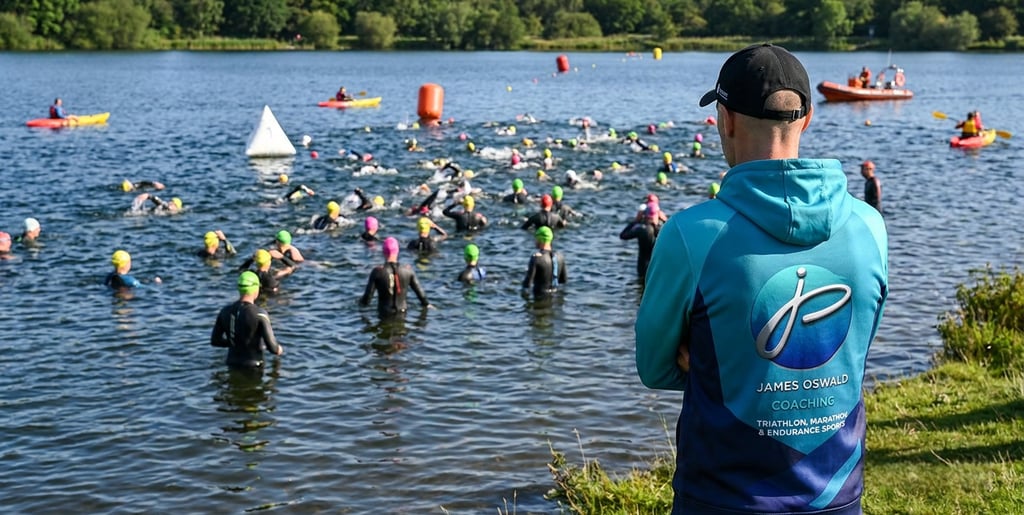
Conquer the Chaos, It's Open Water Swimming Season
It’s finally May (Christmas will be here before you know it !) and many of the Open Water Swim locations are starting to open up their sites for the brave athletes who don’t mid the cooler water temperatures and have early season races to prepare for.
If you’ve spent the winter clocking lengths cruising up and down looking at the black line in the middle of a lane, in a warm, calm pool, stepping into open water can feel like a shock to the system and for some athletes a completely different sport. Whether you’re gearing up for your first triathlon or heading back into lakes, rivers and seas after a break, open water swimming is where things get unpredictable, but also where it all starts to come together, and honestly, where it starts to get real and fun.
It’s Not Just a “Longer Pool”
Open water is a completely different environment. No walls, no lane ropes, no handy black line to follow, just you, the elements, and your sense (or no sense) of direction.
You’ll quickly notice how much more you rely on feel. In a pool, your rhythm is predictable. In open water, it’s constantly being challenged. Waves can disrupt your rhythm, visibility can be limited, and pacing becomes trickier without those natural breaks at the wall. You’ll have to adjust your stroke to choppy conditions, learn the subtle differences in breathing in different water conditions, and stay relaxed when you can’t see the bottom. It can all feel disorienting at first, but that’s completely normal.
It’s also where you’ll need to learn the skill of sighting, lifting your head briefly during your stroke to check where you’re going. It sounds simple, but getting it right without ruining your rhythm, or getting tired takes practice. This practice can initially form part of your pool sets in a controlled environment, but to master it practically takes swims in open water.
The Mental Game Is Huge
Open water swimming isn’t just physical, it’s psychological. Cold water, limited visibility, and being surrounded by other swimmers can all trigger anxiety, especially early on. At Ironman Vichy I even saw athletes panic and get out of the water without swimming a stroke because at 27 degrees it was too warm and mentally, they weren’t prepared for it.
That’s why getting comfortable in open water before race day is so important. The more you expose yourself to those conditions, the more your brain learns that it’s manageable. Confidence in the water can make a massive difference to your overall triathlon performance, not just in the swim, but in how you start the bike, and your positive mindset to how you approach an entire sporting event.
Why You Need to Practice Before Race Day
If your race includes an open water swim, you really don’t want your first experience to be on the start line, and yet if we are honest most people who have been racing for a number of years can admit to this mistake.
Practicing outdoors helps you:
Get used to colder, more variable water temperatures.
Learn how to sight effectively and stay on course.
Experience swimming in a group (and the occasional bump or kick).
Get used to swimming with wildlife, or touching floating objects like branches or weed growing on the bottom.
Learn to swim with currents or tides.
Swim in different water conditions and see how your body reacts to waves, chop or flat.
Practice longer continuous swims, and turning around large course buoys.
Build confidence in an environment that can feel overwhelming at first.
It’s not just about fitness, it’s about familiarity. The more you practice, the calmer and more controlled you’ll feel on race day. The more time you spend in open water, the more you learn to stay relaxed, control your breathing, and trust your stroke, even when conditions aren’t perfect.
Start Simple
If you’re new, don’t overcomplicate it. Start with short swims close to shore, ideally with a group or a coach. Focus on staying relaxed, controlling your breathing, and gradually building confidence rather than distance.
Writing from my own experience even competent open water swimmers benefit from a few “acclimatisation” sessions at the start of the season. The first dip is always a shock, but it comes back quicker than you think.
Wetsuits: Help and Hindrance
For most triathlons, wetsuits are either required or strongly recommended, and they definitely change how you swim.
The biggest benefit is buoyancy. A wetsuit lifts your hips and legs, helping you stay more streamlined with less effort. For many swimmers, that means faster times and less fatigue.
But there are trade-offs:
Some of the time you’ve gained from swimming in the suit can then be lost removing your suit in transition. A simple tip, practice, practice, practice helps reduce time lost to this.
Your shoulders can feel restricted, especially if you’re not used to it. Some manufacturers such as deboer create suits such as the Fjord range that offer buoyancy but with extremely thin arm and shoulder material to decrease the restriction and swimming to feel more like not wearing a wetsuit at all.
Your stroke might feel shorter or tighter.
You can overheat surprisingly quickly in milder conditions.
That’s why it’s worth practicing in your wetsuit before race day. You can even wear it for parts of your pool sessions (where allowed) or controlled outdoor swims to get your body used to the sensation and movement restrictions.
If your race ends up being non-wetsuit legal (usually due to higher water temperatures), some athletes choose to wear a swimskin. These don’t provide buoyancy but are designed to reduce drag and give a performance edge through their hydrophobic features, so it’s worth knowing how they feel too.
Wetsuits are generally banned when the water temperature is 22°C (71.6°F) or higher for Olympic distance (1500m), and 24.6°C (76.3°F) or higher for Ironman-distance swims. If there is doubt regarding water temperature, it’s worth taking your wetsuit and swimskin down to the start to cover any eventuality, however, you will be notified before the swim start.
Safety First...Always!!
Open water swimming is brilliant, but it comes with risks, so a few key habits make a big difference:
Swim where it’s safe and permitted, choose recognised open water venues or lifeguarded areas.
Never swim alone, go with a group or at least one other person. You’re never more than one bad cramp away from serious trouble.
Tell someone your plan, where you’re going, when you’re starting, and when you expect to be done.
Be visible, a bright swim hat is a great idea, especially in busy waters with other swimmers or swim traffic such as boats or skiers,
Use a tow float (swim buoy), these attach around your waist and float behind you, making you more visible and giving you something to hold on to if needed (plus, many have compartments for small valuables like keys).
Also think about what happens after your swim:
Be mindful of cold water, your core temperature can continue to drop after you get out. Don’t stand about chatting for too long before getting warm.
Get dry and warm gradually (layers, warm drinks help).
At the same time, if you’ve been swimming hard in a wetsuit, you might actually be overheating, rehydrate and consider electrolytes to recover properly.
Final Thoughts
Open water swimming can feel like a big leap from the pool, but it’s one of the most rewarding parts of triathlon training if you get it right. It teaches you adaptability, builds resilience, and adds a sense of adventure and achievement to your sessions.
Put in the time to practice, respect the environment, and prioritise safety, and you’ll not only handle race day more confidently, you might even start to enjoy the swim as much as the bike and run.