*** Free consultation ***
Unlocking Your Potential: A Guide to FTP Training in Cycling
Functional Threshold Power (FTP) is a key measure of cycling performance, representing the highest power a rider can sustain for around one hour. It forms the foundation of structured training by helping define training zones, track progress, and pace races effectively. FTP can be tested using methods such as the 20 minute test or ramp test, and improved through targeted workouts like sweet spot intervals, threshold efforts, and sustained blocks at FTP. With consistent training, balanced by adequate low-intensity riding and regular re-testing, FTP provides a clear, data-driven pathway to becoming a stronger and more efficient cyclist.
TRAINING ZONESTRAININGINDIVIDUALISED COACHINGCYCLING
James Oswald, Coach
2/16/20262 min read
Unlocking Your Potential: A Guide to FTP Training in Cycling
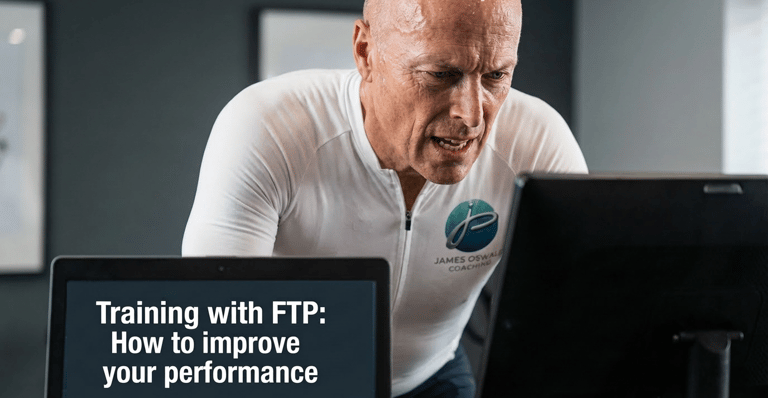
Functional Threshold Power (FTP) is the cornerstone of modern cycling performance. Defined as the highest average power (in Watts) a cyclist can maintain for approximately one hour, it serves as the primary benchmark for fitness and the foundation for structured training.
Why FTP Matters
FTP is more than just a number; it is a physiological marker of your aerobic capacity. By knowing your FTP, you can:
• Define Training Zones: Calculate specific power ranges for recovery, endurance, tempo, and intervals. (A topic covered in my previous Blog: Mastering Your Performance: A Guide to Triathlon Training Zones, 16/02/2026)
• Measure Progress: Track fitness gains over a season as your threshold increases.
• Pace Effectively: Manage your effort during races or long climbs to avoid "blowing up."
How to Test Your FTP
The most common method is the 20-minute test. After a thorough warm-up including a few short Zone 5 bursts to prime the body, ride at your maximum sustainable effort for 20 minutes. Take your average power for that period and multiply it by 0.95 to estimate your 1-hour FTP. Alternatively, some riders use "Ramp Tests" on smart trainers, which increase resistance until exhaustion.
Effective FTP Workouts
To raise your ceiling, you must train at or just below your current threshold. Key workouts can include:
1. Sweet Spot Intervals: Efforts at 88–94% of FTP. These build aerobic engine efficiency with less fatigue than maximal efforts. (e.g., 2 x 20 minutes).
2. Threshold Intervals: Classic "over-under" sets. Such as ride 2 minutes just above FTP followed by 2 minutes just below. This teaches your body to clear lactate while working hard.
3. Sustained Efforts: Riding at 100% of FTP for 10–15 minute blocks to build mental toughness and muscular endurance.
The Path to Improvement
Consistency is the driver of FTP growth. You can aim for two dedicated threshold sessions per week, balanced with plenty of low-intensity "Zone 2" endurance riding. Remember to re-test every 4–6 weeks to ensure your training zones remain accurate as you get stronger.
By focusing on FTP, you move away from guesswork and towards a data-driven approach that supports better results on the road.
Conclusion
Improving your FTP is not about chasing numbers for the sake of it, it’s about becoming a stronger, more efficient cyclist who can sustain power when it matters most. By testing accurately, training with purpose, and balancing intensity with consistent aerobic work, you create a clear pathway for measurable progress. Over time, small gains in threshold power translate into faster race splits, stronger climbs, and greater confidence on the bike.
If you want structured, personalised guidance to raise your FTP and integrate it seamlessly into your triathlon training, James Oswald Coaching delivers data-driven programmes tailored to your goals, schedule, and performance level.
Thought for the day: When was the last time you took an FTP test?